Have you ever seen the Catedral de Pedra de Canela (Canela’s Stone Cathedral), one of the top tourist attractions in the Serra Gaúcha region of southern Brazil? It’s so much more than just a religious building. It’s a symbol of the faith, culture, and history of the city and the entire region—a monumental masterpiece that’s well worth a visit. In 2010, it was voted one of the 7 Wonders of Brazil in a public poll by the website UOL. Built in the neo-Gothic style, the church is a true icon of gaúcho faith and culture.
The cathedral’s election as one of the 7 Wonders of Brazil is a fitting tribute to its beauty and cultural importance. The church is an architectural masterpiece that represents the faith and culture of its people.
In this post, we’ll introduce you to the Catedral de Pedra de Canela, highlighting its history, architecture, details, and events. We’ll also give you some useful tips on location, hours, mass times, and transportation, plus some fun facts about the church. By the end of this post, you’ll be eager to visit the Catedral de Pedra de Canela and be amazed by everything it has to offer.
How to Get to the Catedral de Pedra de Canela
It’s easy to get to and find, as it’s located right in the center of Canela, at Praça da Matriz. It’s easily accessible by car, bus, or on foot. If you’re in Gramado, you can catch a bus from the terminal or from Rua Coberta that goes to Canela. The trip takes about 20 minutes and costs around R$ 5.00. If you’re already in Canela, you can walk to the church or grab a taxi or an Uber.
The Catedral de Pedra de Canela is also a stop on the Bustour route, a panoramic bus that visits the region’s main tourist spots. You can buy your ticket online or at sales points and hop on and off as many times as you like during the day. The Bustour runs daily from 8:30 am to 6:30 pm.
Bustour prices and schedules: https://bustour.com.br/
When to Visit the Catedral de Pedra de Canela
The cathedral can be visited any time of year, as its beauty shines through in every season. The church is open daily from 9 am to 5:30 pm, including Sundays and holidays. Admission is free; only access to the church tower is paid.
The Catedral de Pedra de Canela holds masses Monday through Friday at 6:30 pm, Tuesdays at 7 am, Saturdays at 6 pm, and Sundays at 8 am, 10:30 am, and 6 pm. If you’d like to participate in a religious service, it’s best to arrive early to secure a seat.
The Catedral de Pedra de Canela also hosts special events on certain holidays, like Easter, Corpus Christi, and Christmas. During these times, the church receives a themed decoration and offers cultural and artistic activities for visitors. One of the highlights is the spectacle where Santa Claus rappels down one of the church’s towers.
What to Do at the Catedral de Pedra de Canela
The Catedral de Pedra de Canela is a church that has so much to offer its visitors, from its history to its intricate details. The Parish of Nossa Senhora de Lourdes is a place to admire, be moved, and feel inspired.
The History of the Catedral de Pedra de Canela
The Catedral de Pedra de Canela has a long and fascinating history that dates back to the early 20th century. The idea to build a stone church in Canela emerged in the 1930s, but construction only began in 1953. The basaltic stone, abundant in the region, was used to build the cathedral, giving it an imposing and unique appearance.
The Stone Cathedral features a Gothic style inspired by European cathedrals. It has a 65-meter-tall tower that houses a carillon of 12 bronze bells, called the Carrilhão da Independência (Independence Carillon), which was manufactured in Italy and installed in 1972. The bells weigh between 100 kg and 1 ton each and are named after Brazilian historical figures like Dom Pedro I, Tiradentes, and José Bonifácio. The bells play melodies and religious hymns at special times, such as noon, 6 pm, and 8 pm.
The Stone Cathedral was completed in 1987, after 34 years of construction. In 2010, it was elected one of the Seven Wonders of Brazil in a contest promoted by Caras magazine. In 2016, it ranked fifth in the Travelers’ Choice award by the travel website TripAdvisor, as one of the 10 best tourist attractions in Brazil.
The Architecture of the Catedral de Pedra de Canela
The Catedral de Pedra de Canela is an architectural work of art that impresses with its beauty and detail. The church’s facade is entirely clad in basalt stone, which contrasts beautifully with the wooden windows and
doors. The church tower features a clock and a cross at its top, visible from afar.
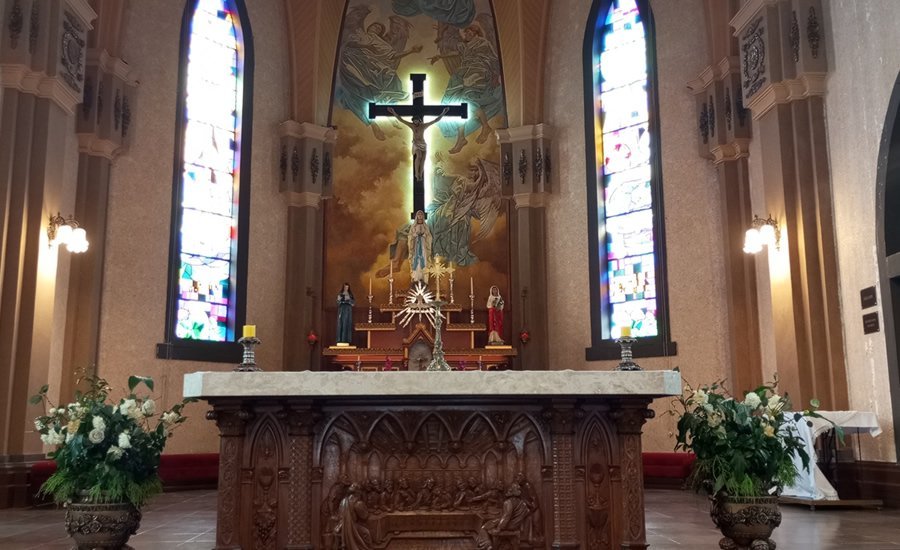
The interior of the church is equally enchanting, with a central nave and two side aisles that can hold around a thousand people. The church’s stained glass windows are colorful and harmonious, with images composed of glass in different contrasts to symbolize both Canela’s patron saint and the messages she conveys.
The Light Show at the Catedral de Pedra de Canela
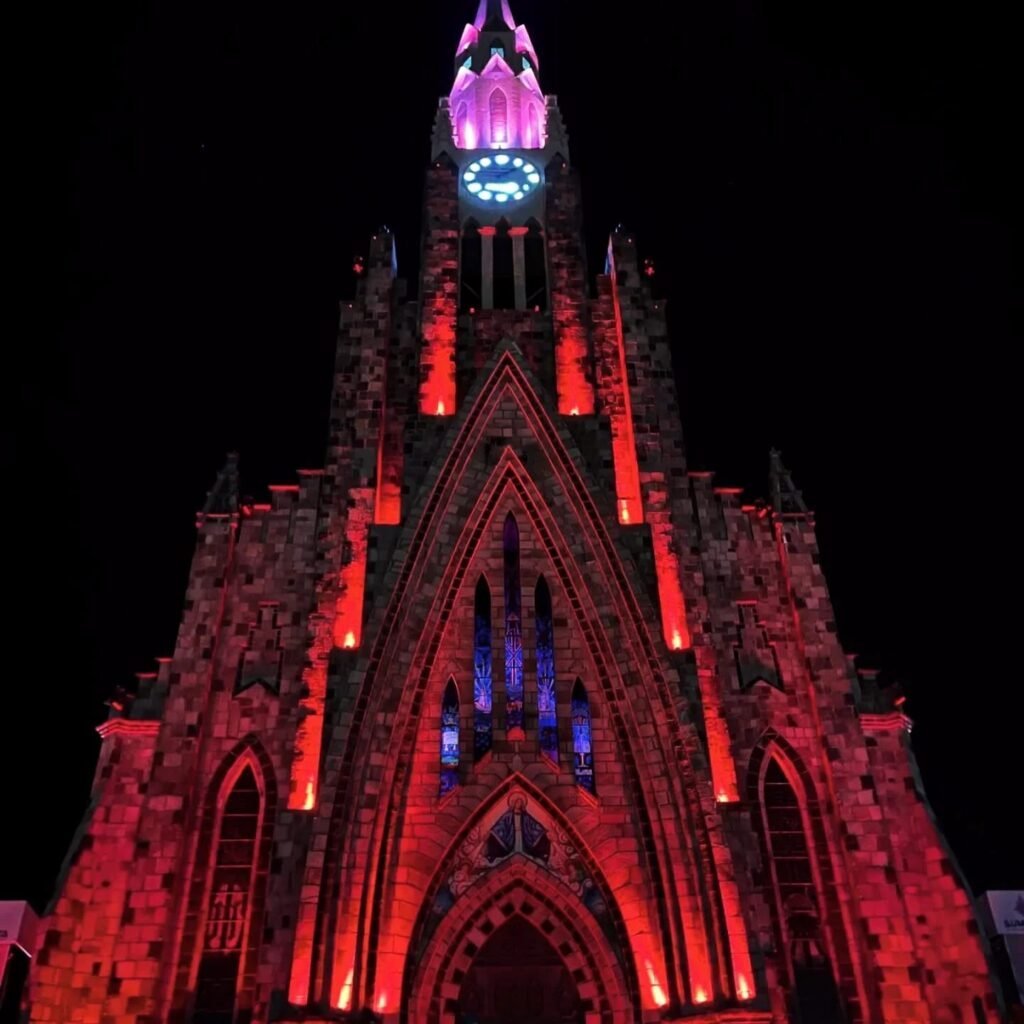
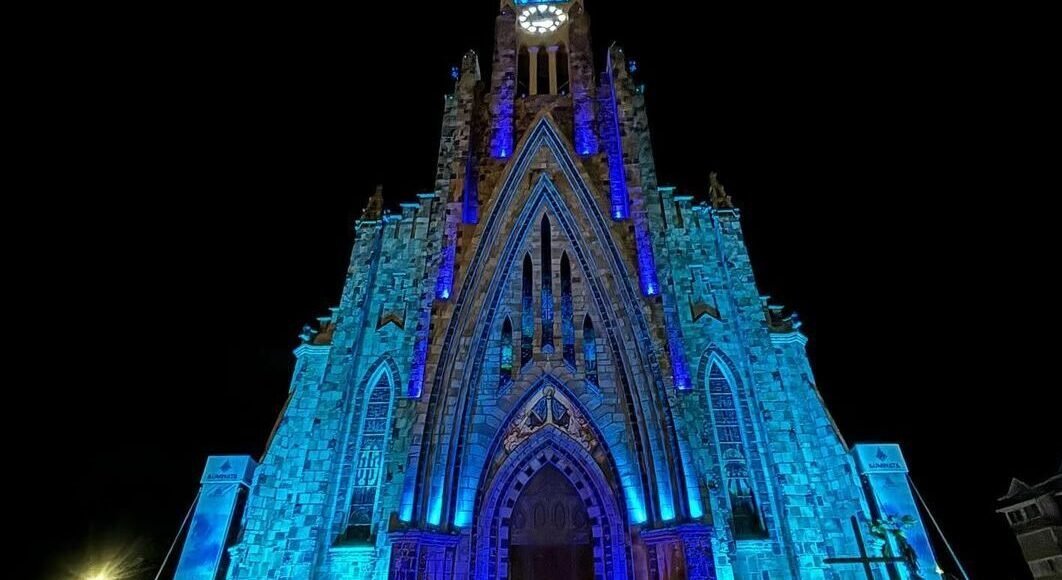
If the church is beautiful during the day, it’s even more stunning at night. Every day, starting at 8 pm, a light show takes place on the facade of the Catedral de Pedra de Canela, which is a spectacle in itself. The lights change color and intensity, creating incredible visual effects that highlight the church’s beauty. The light show is accompanied by a soundtrack that varies according to the time of year and the event’s theme.
The light show at the Catedral de Pedra de Canela is free and lasts about 15 minutes. It takes place at three times: 8:30 pm, 9:30 pm, and 10:30 pm. It’s an unmissable attraction for anyone visiting the city, especially during the Christmas season, when the church receives special decorations and Santa Claus rappels down one of its towers.
The Tourist and Historical Importance of the Catedral de Pedra de Canela
The Catedral de Pedra de Canela is one of the main tourist attractions in the Serra Gaúcha, enchanting visitors with its history, architecture, and details. It is a symbol of the faith, culture, and history of the city and the region.
The Catedral de Pedra de Canela is a historical and cultural heritage site of Canela, preserving the memory and identity of its people.